Petra Schröder · 13 October 2026
Nighttime Light Pollution Alters Bloom Cycles in Central European Meadows
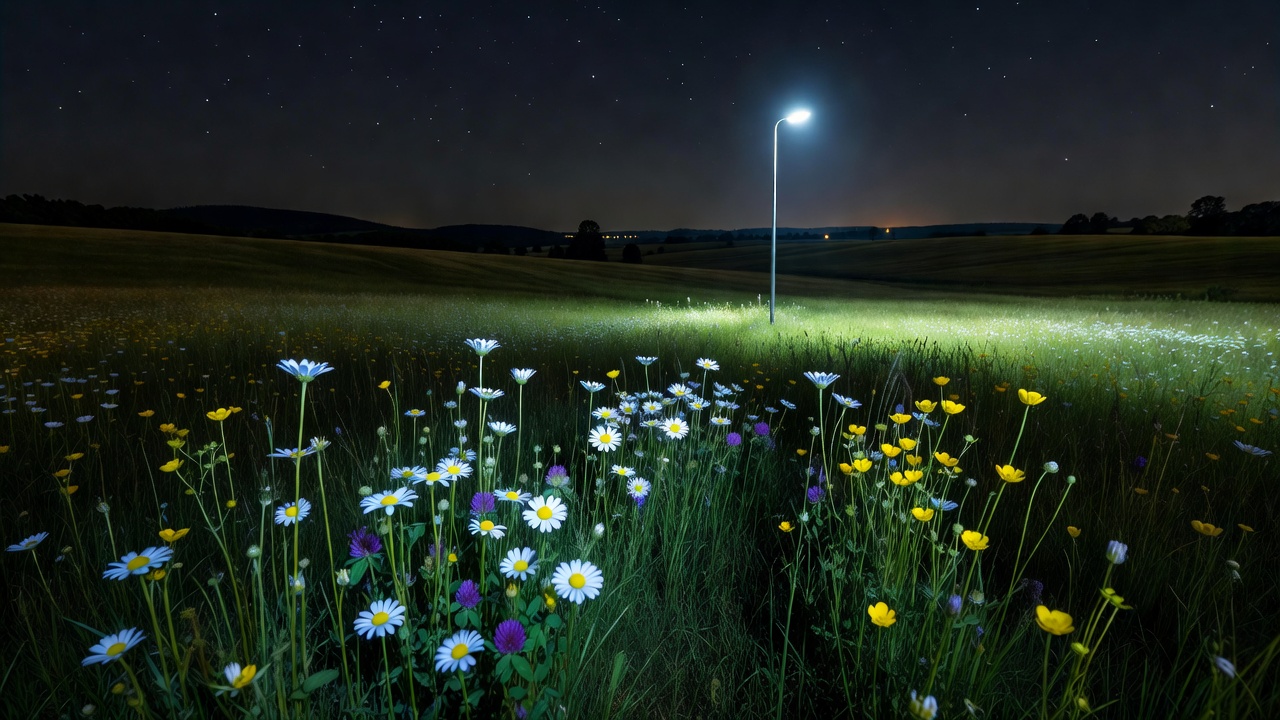
Artificial light at night has extended across meadows in Germany, Austria, and Switzerland, and researchers have documented changes in bloom timing for multiple native species since systematic monitoring began in the early 2000s. Data collected through 2026 shows that plants once synchronized to natural day length now initiate flowering weeks earlier or later depending on proximity to roads, villages, and industrial zones.
Mechanisms Behind the Shift
Plants rely on photoperiod cues to regulate flowering, and continuous low-level illumination from streetlights and buildings disrupts phytochrome responses that normally trigger seasonal transitions. Studies indicate that even 0.1 lux can alter gene expression in species such as Leucanthemum vulgare and Trifolium pratense, while higher intensities near highways produce more pronounced delays or accelerations. Observers note that meadows within 500 meters of permanent lighting sources display the clearest deviations from historical phenology records.
Regional Data Patterns Through October 2026
Networks of camera traps and citizen-science apps have compiled bloom dates across hundreds of sites, and figures reveal that central German meadows exposed to skyglow now average 12 days earlier flowering for early-season species compared with darker reference plots. In contrast, late-season composites in Austrian valleys show delayed onset by up to 18 days when LED fixtures operate past midnight. These measurements come from repeated surveys conducted each spring and autumn, with October 2026 marking the latest complete dataset release from coordinated field teams.
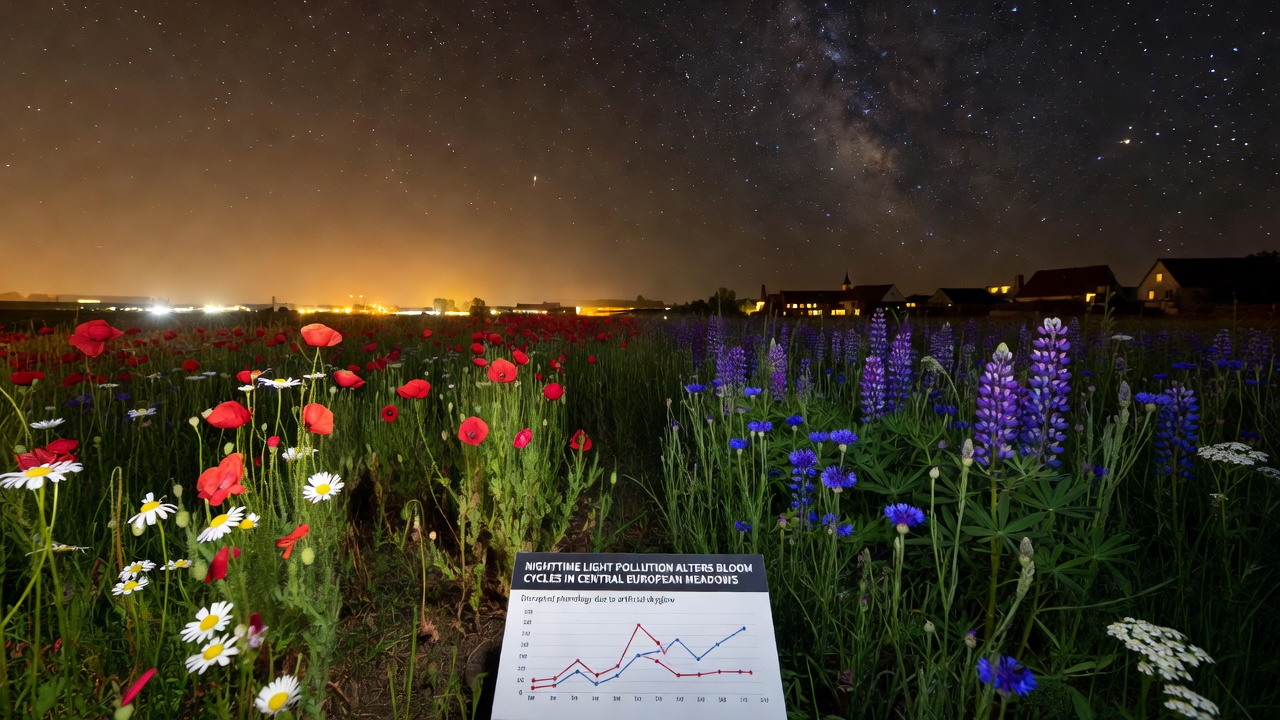
European Environment Agency reports compile satellite imagery with ground validation and confirm that light-polluted corridors along the Rhine and Danube corridors correlate with teh largest phenological offsets. Researchers at institutions tracking the same plots for fifteen years have isolated lighting from temperature and precipitation variables, demonstrating that the light signal remains statistically significant after controlling for climate trends.
Species-Specific Responses
Grasses and forbs react differently, with some accelerating seed set while others extend vegetative growth. One long-term plot in Bavaria recorded Plantago lanceolata producing flowers in November under constant illumination, a pattern absent from adjacent unlit meadows. Pollinator activity also adjusts to these new schedules, although the full chain of consequences for seed dispersal and soil seed banks requires additional seasons of observation.
Monitoring Technology and Future Tracking
Remote-sensing platforms now combine multispectral drones with fixed light meters, allowing continuous recording of both photon flux and floral cover. Teams have begun cross-referencing these datasets with national biodiversity inventories to quantify how altered bloom windows affect overall meadow productivity. The approach yields repeatable metrics that regulatory bodies can use when evaluating lighting ordinances.
Conclusion
Measurements gathered through October 2026 establish a clear association between nighttime illumination and shifted bloom cycles across Central European meadows, with species responses varying by distance from light sources and by functional group. Continued integration of satellite, drone, and field data will refine understanding of these interactions while supporting evidence-based decisions on outdoor lighting design.