Tina Fischer · 27 October 2026
Citizen Science Networks in the Harz Region Deploy Acoustic Sensors to Map Pollinator-Friendly Grassland Recovery
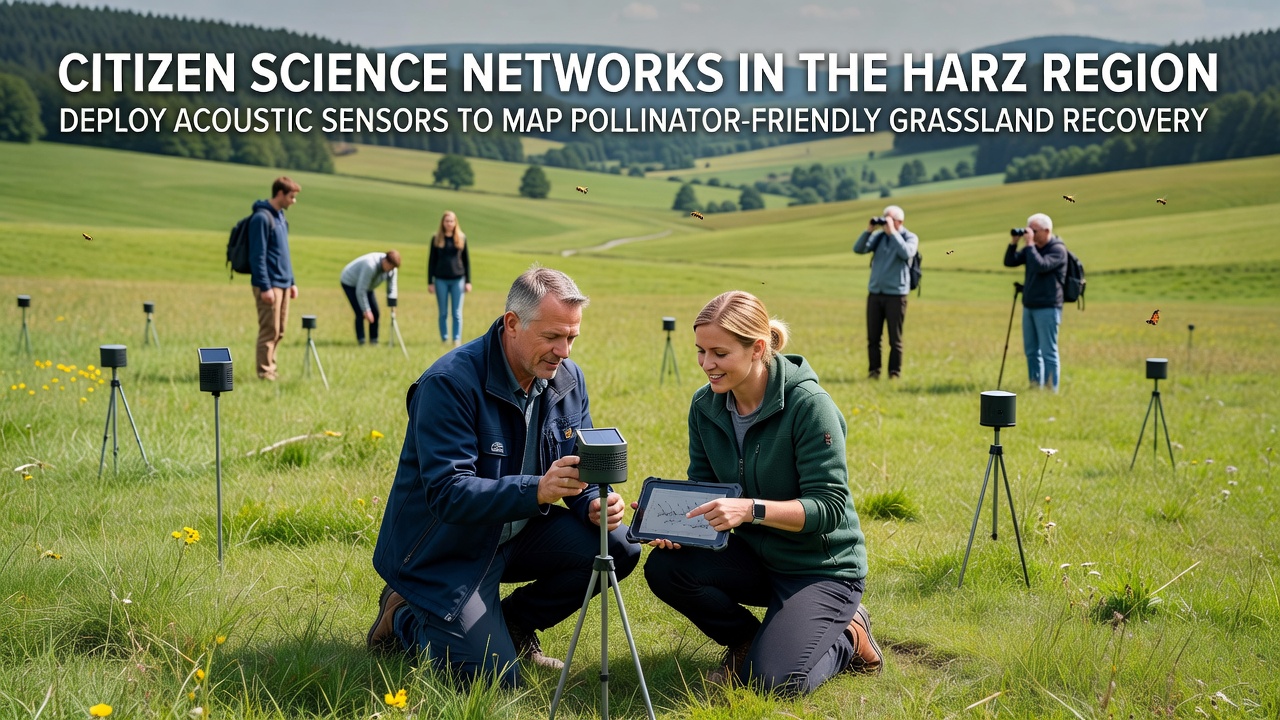
Grassland recovery efforts in Germany's Harz region have gained momentum through coordinated citizen science networks that rely on acoustic sensors, and these tools capture the distinct sound signatures of pollinating insects while mapping progress across restored meadows. Local volunteers, university researchers, and regional conservation groups have collaborated since the early 2020s to install battery-powered recording devices that distinguish bee and hoverfly activity from background noise, creating detailed spatial data on habitat quality.
Acoustic Monitoring Technology in Practice
Acoustic sensors operate by recording ultrasonic and audible frequencies produced during insect flight, then algorithms filter the data to identify species groups such as bumblebees and solitary bees that serve as key pollinators for native flora. In the Harz, these devices sit on low posts at regular intervals across former agricultural plots now undergoing restoration, and the continuous recordings allow analysts to generate heat maps showing where pollinator density increases after seeding with wildflower mixes. Observers note that this method avoids the labor-intensive netting surveys traditionally used, while providing round-the-clock coverage even during poor weather.
By October 2026 the networks had expanded to cover 47 monitoring sites, with each location transmitting summarized activity indices via low-power wide-area networks to a central database maintained at the University of Göttingen. The resulting datasets reveal seasonal peaks in pollinator presence that align with blooming periods of targeted grassland species, and project coordinators cross-reference these patterns against satellite-derived vegetation indices to assess recovery trajectories.
Volunteer Roles and Training Programs
Citizen participants receive training on sensor calibration, data upload protocols, and basic habitat assessment before deploying into the field, and many contribute additional observations through a mobile application that logs flower visitation rates at fixed transects. These combined inputs feed into models that predict how different restoration techniques influence pollinator communities over multi-year timescales. Researchers at participating institutions process the acoustic files using machine-learning classifiers trained on verified recordings from European pollinator libraries, achieving identification accuracy rates above 85 percent for common taxa.
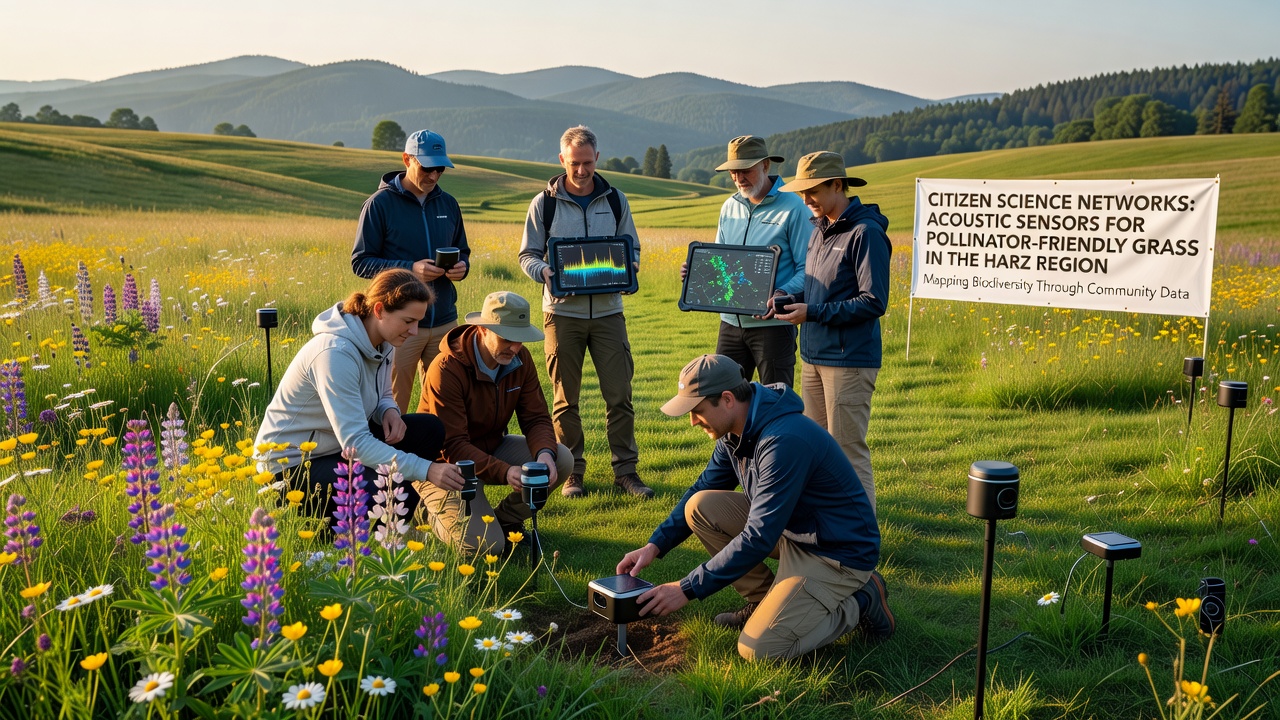
Local hiking clubs and school groups have supplied a steady stream of volunteers, which keeps maintenance costs low while expanding geographic coverage into steeper terrain that professional teams reach less frequently. Data validation occurs through periodic expert review of flagged recordings, and any anomalies trigger follow-up visits to verify sensor function or note unexpected environmental changes such as invasive plant encroachment.
Integration with Regional Conservation Policy
Findings from the acoustic networks inform management decisions by the Harz National Park administration and neighboring forestry districts, where planners adjust grazing regimes or mowing schedules based on real-time pollinator activity levels. Federal funding through Germany's National Biodiversity Strategy has supported sensor procurement and data infrastructure, while partnerships with the European Environment Agency provide standardized protocols that allow comparison with similar projects in the Alps and Pyrenees. According to the German Federal Agency for Nature Conservation, acoustic monitoring has documented measurable rises in pollinator activity within three years of grassland restoration at multiple Harz pilot sites.
One study from the Helmholtz Centre for Environmental Research tracked recovery metrics across 12 comparable meadows and found that sites equipped with citizen-operated sensors showed faster detection of biodiversity gains than those relying solely on annual professional surveys. The continuous data stream also captures short-term responses to weather extremes, such as drought-induced dips in activity that traditional sampling might miss.
Data Sharing and Broader Applications
Processed results appear in open-access repositories that researchers from other regions can query for comparative analyses, and several academic papers have already cited the Harz datasets when modeling climate impacts on Central European pollinators. European Environment Agency reports highlight how acoustic citizen science contributes to the EU Pollinators Initiative by supplying spatially explicit evidence of habitat improvement. Network organizers hold annual workshops to refine sensor placement strategies and incorporate feedback from volunteers on practical deployment challenges.
Expansion plans for 2027 include integration with soil moisture probes and camera traps to build multi-layered ecosystem assessments, while maintaining the core focus on acoustic detection of pollinator recovery. The approach demonstrates how distributed volunteer networks can scale monitoring efforts across large landscapes without proportional increases in professional staffing.
Conclusion
The Harz region's acoustic sensor program illustrates how citizen science networks translate technological tools into actionable conservation intelligence, and ongoing data collection continues to refine understanding of pollinator responses to grassland restoration. As additional sites come online and analytical methods improve, the accumulated records will support evidence-based adjustments to management practices across the broader Central European uplands.